


جهاز التوجيه الخلوي الصناعي
Product ID: TR-444
تم تطوير جهاز التوجيه الصناعي TR-444 بشكل مستقل من قبل شركة تيسبرو، ويدعم شبكات 2G/3G/4G العالمية، وإيثرنت جيجابت (1*WAN 2*LAN)، وشبكة Wi-Fi ثنائية النطاق 4/6. تم بناؤه بواجهات 1*RS232، 2*RS485، و4*GPIO بالإضافة إلى دعم Modbus/BACnet، ويضمن اتصالا موثوقا لإنترنت الأشياء والأتمتة الصناعية.
-
الشبكة
2G / 3G / 4G
-
الواجهة
1*WAN 4*LAN 10 / 100 / 1000Mbps
-
الواي فاي
واي فاي 4 (802.11b/g/n) / واي فاي 6 (802.11a/b/g/n/ac/ax)
-
الإدخال/الإخراج التسلسلي
1*RS232 2*RS485 4*GPIO
احصل على عرض سعر مجاني الآن
تحميل

فيديو التوجيه الصناعي TR-344
يظهر جهاز التوجيه TR-444 Industrial LTE اتصالا موثوقا بين 4G/LTE، ومتانة صناعية، وشبكات آمنة، واتصال عن بعد موثوق لأتمتة وأجهزة إنترنت الأشياء الذكية ونشر الميدان.
Features
المزايا الأساسية

4G/3G/2G وشريحتين مزدوجين/eSIM
يدعم وصولا متنوعا إلى شبكات الاتصالات الخلوية (2G/3G/4G/5G)، مع خيارات 4G LTE بما في ذلك Cat1/Cat4/Cat6. مزود بإمكانيات شريحة SIM مزدوجة وeSIM مزدوجة لتمكين التبديل المرن ونسخ الربط الاحتياطية.

واجهة إيثرنت جيجابت وواي فاي
مزود بمنافذ إيثرنت جيجابت تدعم الاستشعار التلقائي للشبكة اللاسلكية WAN/LAN، ويتميز بقدرات واي فاي 4 (2.4 جيجاهرتز) و6 (5 جيجاهرتز) ثنائي النطاق، ويجمع بين الإرسال السلكي عالي السرعة والوصول اللاسلكي المريح لتلبية احتياجات الاتصال بالمعدات الصناعية، ونقل البيانات، والشبكات الميدانية.

واجهات التسلسلية وGPIO المدمجة
تصميم مدمج يضم منافذ تسلسلية (1*RS232، 2*RS485) وواجهات 4*GPIO يسهل ربط المعدات الصناعية ويتيح التحكم في المدخلات والمخرجات الرقمية (تشغيل/إيقاف).

نظام تيسبروOS والتشغيل والصيانة البعيدة
مزود بنظام التشغيل TesproOS الخاص ولوحة تحكم بصرية قائمة على الويب، يتيح إدارة الأجهزة بدورة حياة كاملة. يدعم مراقبة حالة العنقود في الوقت الحقيقي، وتكوين معلمات الدفعات عن بعد، وتشخيص السجلات، وترقيات البرمجيات الثابتة عبر الإنترنت عبر السحابة؛ وبالاقتران مع تشفير VPN متعدد الطبقات، يسهل التشغيل والصيانة الفعالة دون الحاجة إلى زيارات ميدانية.

نظام البروتوكول الغني
يدمج الاتصال السحابي الشمالي (MQTT/OPC UA)، والحافلات الميدانية الصناعية (Modbus/ProfiNet)، وبروتوكولات خاصة بصناعة الطاقة وتخزين الطاقة (DLT645/IEC61850). وبالاقتران مع تشفير OpenVPN/IPSec القوي وقدرات تطوير البروتوكولات المخصصة السريعة، يبسط عملية دمج الجهاز — مما يتيح وظيفة التوصيل والتشغيل—ويسرع من تقارب بيانات OT وتقنية المعلومات.

مقاومة ممتازة للطقس
يدعم نطاق واسع من درجات حرارة التشغيل من -40°م إلى 75°م ومستويات رطوبة غير مكثفة تتراوح بين 5٪ إلى 95٪ رطوبة نسبية، إلى جانب تصنيف حماية IP30، ويتعامل بشكل موثوق مع البيئات الصناعية المعقدة والقاسية—بما في ذلك الارتفاعات العالية، ودرجات الحرارة العالية، والضغوط العالية—لضمان تشغيل المعدات بشكل مستقر.
Tech Specs
جدول مواصفات الموجه الصناعي
مواصفات الأجهزة
| الفئة | TR-444 |
| نظام الأجهزة | |
| وحدة المعالجة المركزية | معالج Cortex-A53 ثنائي النواة، بسرعة 1.3 جيجاهرتز |
| ذاكرة RAM | 512 ميجابايت، DDR3 |
| فلاش | 256 ميجابايت |
| واجهات الشبكة | |
| منافذ الإيثرنت | 5 × 10 / 100 / 1000 ميجابت في الثانية |
| شبكة الهاتف المحمول | 4G LTE:Cat1 / Cat4 / Cat6;5G NR: eMBB/RedCap |
| WAN | 1 x WAN 10 / 100 / 1000 ميجابت في الثانية |
| LAN | 4 × شبكة LAN 10 / 100 / 1000 ميجابت في الثانية |
| فتحة SIM | بطاقة SIM مزدوجة / بطاقة eSIM مزدوجة / 1× SIM 1× eSIM |
| الهوائي | ذكر SMA (خيط خارجي، فتحة داخلية); منافذ الهوائي: 4 قطع |
| الواجهات الفيزيائية | |
| محطة التأريض | 1 × برغي تأريض |
| مؤشرات الحالة | 6 قطع |
| زر إعادة الضبط | 1 PC |
| واجهات صناعية | |
| المنافذ التسلسلية | 2 x RS485 و1 x RS232، عزل عالي الجهد 3kV |
| واجهات الإدخال/الإخراج | يدعم 4 × إدخال/إخراج؛ يمكن تكوين DI/DO |
| شبكة واي فاي اللاسلكية / شبكة WLAN | |
| تردد الواي فاي | 2.4 جيجاهرتز، 5 جيجاهرتز |
| معايير البروتوكول | واي فاي 4: 802.11b/g/n; واي فاي 6: 802.11a/b/g/n/ac/ax |
| أقصى معدل نقل | AX3000 |
| معدل البيانات | 802.11 بيار/جيم/ن: حتى 574 ميجابت في الثانية؛ 802.11a/b/g/n/ac/ax: حتى 2402 ميجابت في الثانية |
| قوة الإرسال | 802.11b: 16dBm ±2dBm (11Mbps); 802.11g: 16dBm ±2dBm (54Mbps); 802.11n@2.4GHz: 16dBm ±2dBm (HT20 MCS7); 802.11n@2.4GHz: 16dBm ±2dBm (HT40 MCS7) |
| مسافة الإرسال | خط الرؤية ≤ 100 متر (المسافة الفعلية تعتمد على بيئة الموقع) |
| مصدر الطاقة | |
| واجهة الطاقة | واجهة طاقة التيار المستمر: 1 (DC2.1) |
| نطاق جهد الإدخال | مزود الطاقة المستمر (DC): 12–36 فولت؛ يدعم حماية القطبية العكسية |
| PoE (اختياري) | يدعم مزود طاقة PoE؛ متوافق مع معايير IEEE 802.3af / IEEE 802.3at (PoE) |
| الطاقة الجاهزة | 120 مللي أمبير – 200 مللي أمبير @12V |
| القدرة التشغيلية | 150 مللي أمبير – 320 مللي أمبير @12V |
| القوة القصوى | 320 مللي أمبير @12V |
| الظروف البيئية | |
| درجة حرارة التشغيل | -40°C إلى 75°C |
| رطوبة التشغيل | من 5٪ إلى 95٪ (غير مكثف) |
| درجة حرارة التخزين | -40°C إلى 80°C |
| المواصفات الميكانيكية | |
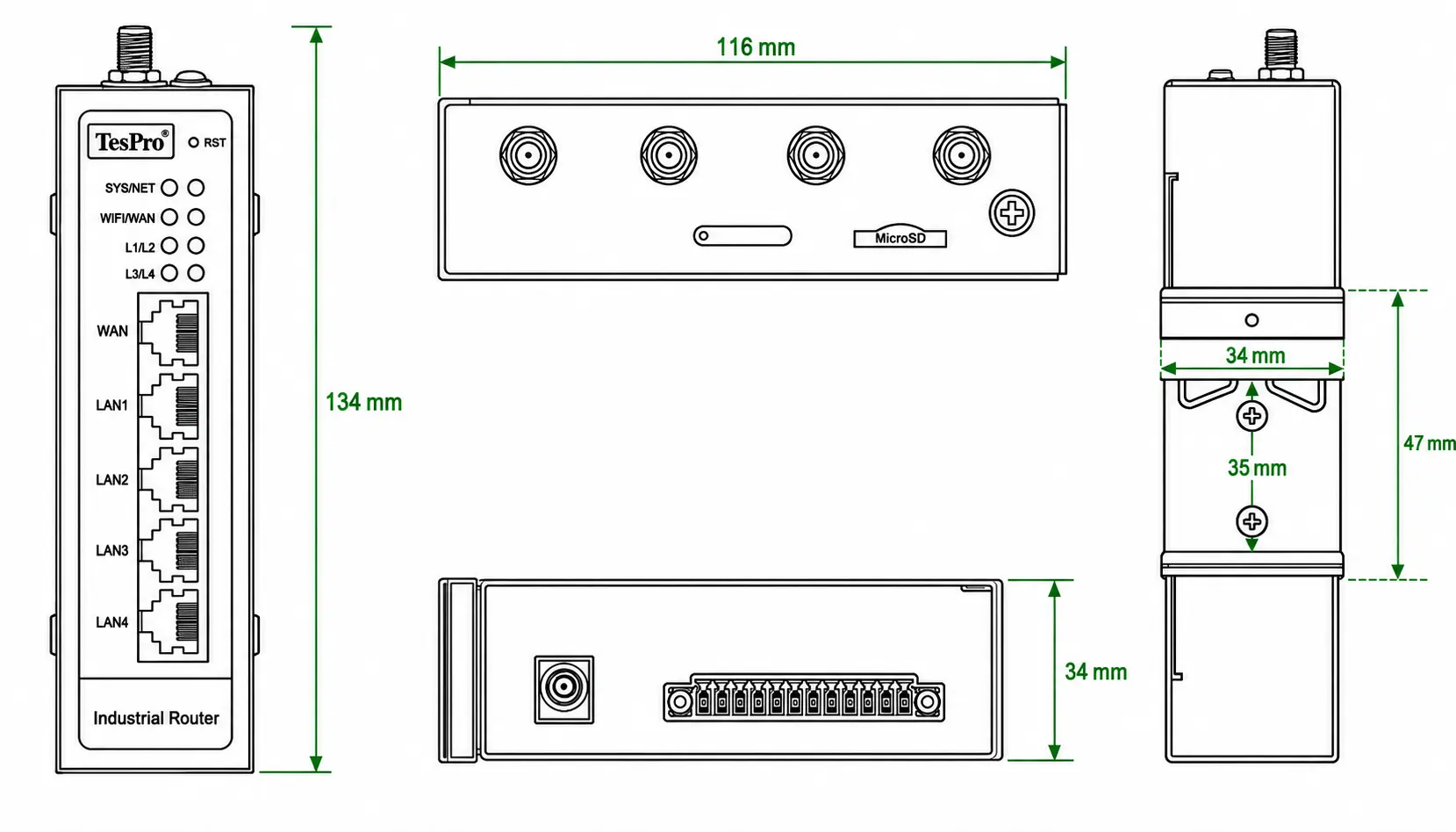
| أبعاد المنتج | 116 × 134 × 34 مم (بما في ذلك موصلات الهوائيات) |
| تصنيف الحماية | IP30 |
| الإسكان | الغلاف المعدني |
| طريقة التثبيت | سكة DIN / تثبيت على الحائط |
| طريقة التبريد | التبريد بدون مروحة |
| وزن المنتج | 450 جرام |
| الموثوقية | |
| صدمة | IEC60068-2-27 |
| الاهتزاز | IEC60068-2-6 |
| انزل | IEC60068-2-32 |
| الشهادات والمعايير | |
| الشهادة التنظيمية | CE، RoHS |
| معايير EMC | EN 55032؛ EN 55035؛ EN IEC 61000-6-3:2021؛ EN IEC 61000-6-1:2019؛ EN 301489-1؛ EN 301489-17؛ EN 301 489-52 |
| معايير الترددات الراديوية | EN300328; EN301893; EN301511; EN301908-1/-2/-13 |
| سلامة البحث والإنقاذ | EN50665؛ في IEC62368-1 |
| السايبر | EN18031-1؛ EN18031-2 |
| التفريغ الكهروستاتيكي (ESD) | EN 61000-4-2:2009 |
| المناعة المشعة | EN IEC 61000-4-3:2020 |
| الانفجار (EFT) | EN 61000-4-4:2012 |
| الزيادة | EN 61000-4-5:2014 A1:2017 (منافذ إيثرنت) |
| الحصانة التي أجريت | EN 61000-4-6:2014 |
| مناعة الموجات التذبذبية | EN61000-4-12، المستوى 3 |
| مناعة المجال المغناطيسي | EN61000-4-8، 400 أمبير/م أفقي/عمودي (>المستوى 2) |
مواصفات البرمجيات
| الفئة | TR-444 |
| البروتوكولات الصناعية وقدرات البيانات | |
| البروتوكولات الصناعية | تشمل Modbus RTU، Modbus TCP، BACnet، Mbus، OPC UA، وبروتوكولات أخرى متنوعة |
| مودباس | مودباس RTU، مودباس TCP |
| بروتوكولات الأجهزة الصناعية | بروفينت، إيثركات، إيثرنت (اختياري) |
| باكنت | باكنت |
| OPC UA | OPC UA |
| بروتوكولات عداد الكهرباء | DLT 645-2007، IEC 1107، IEC 61850، IEC 62056-21، DLMS |
| DN3 | الأوضاع المدعومة: المحطة، المحطة الخارجية؛ الاتصال: TCP |
| DLMS/COSEM | DLMS |
| سجلات مودباس المخصصة | طلبات وحدات السجلات المخصصة من مودباس TCP، قادرة على قراءة/كتابة الملفات داخل جهاز التوجيه، مما يوسع وظائف عميل مودباس TCP |
| صيغ البيانات المدعومة | INT/UINT (16/8/32-بت)، Float 32-بت، HEX وASCII؛ يدعم تحويل MSB/LSB وترتيب البايت (ABCD/DCBA/CDAB/BADC) |
| وظيفة DTU | يدعم النقل الشفاف TCP/UDP؛ يدعم تحويل RTU من Modbus إلى Modbus TCP؛ يدعم أوضاع DCTCP/DCUDP |
| البيانات إلى الخادم | HTTP(S)/MQTT/Azure MQTT; تقارير البيانات متعددة المصادر; فاصل زمني لا يقل عن 1 ثانية; برمجة Lua |
| بوابة مودباس / MQTT | يسمح بإرسال الأوامر إلى خادم Modbus عبر وسيط MQTT واستقبال البيانات |
| واجهة برمجة التطبيقات / واجهة الويب | يدعم واجهة برمجة تطبيقات الويب الشبكية؛ نقاط نهاية واجهات برمجة التطبيقات لاسترجاع أو تغيير البيانات |
| قدرات الشبكات | |
| الوصول إلى الشبكة | شبكة 2G/3G/4G الخلوية (أو شبكة VPDN الخاصة) |
| التحقق من الوصول | يدعم مصادقة CHAP/PAP |
| بروتوكولات الشبكة المحلية | ARP، إيثرنت |
| بروتوكولات WAN | PPP، PPPoE، DHCP؛ TCP، UDP، IPv4، IPv6، ICMP، NTP، DNS، HTTP، HTTPS، SFTP، FTP، SMTP، SSL/TLS، ARP، VRRP، PPP، PPPoE |
| بروتوكولات الشبكة | UPnP، SSH، DHCP، TELNET، SMPP، SNMP، MQTT |
| التوجيه | التوجيه الثابت، التوجيه الديناميكي OSPF |
| NAT | DMZ، NAT، NAT-T، NAT64 (مدرج تحت جدار الحماية) |
| DHCP | تخصيص IP الثابت والديناميكي، ترحيل DHCP، تكوين خادم DHCP، الحالة، الإيجارات الثابتة؛ يدعم عناوين MAC البرية |
| النسخ الاحتياطي للشبكة / التحويل التلقائي | خيارات WAN وVRRP وخيارات الاتصال السلكي؛ جميعها يمكن استخدامها كحلول تجاوز تلقائي |
| جودة الخدمة | قائمة انتظار أولوية حركة المرور بناء على المصدر/الوجهة، الخدمة، البروتوكول، أو المنفذ؛ WMM، 802.11 |
| تطبيقات الملكية الفكرية | يدعم نظام Ping، Traceroute، خادم DHCP، ترحيل DHCP، عميل DHCP، مرحل DNS، DDNS، Telnet |
| DNS/DDNS | يدعم DoH (DNS عبر HTTPS)؛ تكوينات مزودي خدمة DDNS متعددة وتخصيص يدوي |
| الواي فاي | |
| أوضاع الواي فاي | واي فاي 4: 802.11b/g/n; واي فاي 6:802.11a/b/g/n/ac/ax; يدعم أوضاع نقاط الوصول (AP) والمحطة (STA) |
| أمان الواي فاي | WPA2-Enterprise/PSK، WPA-EAP/PSK، WPA3-SAE/EAP، OWE; AES-CCMP، TKIP، فصل العملاء، EAP-TLS، 802.11w PMF، وغيرها |
| أقصى عدد من عملاء الواي فاي | واي فاي 4: حتى 30 اتصالا متزامن; واي فاي 6: حتى 256 اتصالا في نفس الوقت; |
| تتابع النقطة الساخنة | يعيد توجيه صفحة تسجيل الدخول الخاصة بنقطة الاتصال اللاسلكي إلى الأجهزة المتصلة لاحقا (مرحل البوابة المحتجزة) |
| SSID / ESSID | وضع التخفي في SSID؛ التحكم في الوصول المعتمد على عناوين MAC |
| أنماط التشغيل | يدعم أوضاع AP، والعميل، ونظام التوزيع اللاسلكي (WDS) |
| ميزات الأمان | نظام مفتوح، مفتاح مشترك، مصادقة WPA/WPA2؛ تشفير WEP/TKIP/AES |
| أمن الشبكة وVPN | |
| أمن حماية الشبكة | إعادة توجيه المنافذ / قواعد المرور / TTL مخصص؛ تكوين جدار الحماية WebUI/CLI؛ DMZ، NAT/NAT-T/NAT64 |
| أمن حماية البيانات | يدعم وظائف VPN بما في ذلك PPTP، L2TP، GRE، IPSEC VPN، DMVPN، OPENVPN، WireGuard، وغيرها؛ يدعم شهادة رقمية للشهادات الرقمية |
| المصادقة | مفاتيح مشتركة مسبقا، شهادات X.509، TACACS، RADIUS (مدمج/خارجي)، حجب IP/الوقت/تسجيل الدخول، مولد كلمات مرور عشوائية |
| الحماية من الهجوم | حماية DDoS (SYN flood، SSH، HTTP/HTTPS)؛ حماية مسح المنافذ (SYN-FIN، SYN-RST، X-mas، NULL، FIN) |
| VLAN | عزل VLAN القائم على المنافذ والوسم |
| التحكم في الوصول | التحكم المرن في الوصول ل SSH، وواجهة الويب، وواجهة السطوع، وTelnet |
| فلتر الويب | القائمة السوداء للمواقع غير المرغوب فيها؛ القائمة البيضاء للمواقع المسموح بها فقط |
| إدارة الشهادات | أدوات توليد الشهادات؛ يمكنها إنشاء شهادات CA، الخادم، العميل، Let's Encrypt، وSCEP |
| OpenVPN | يدعم عدة عملاء وخادم واحد في نفس الوقت؛ يدعم 27 طريقة تشفير |
| IPsec | XFRM، IKEv1، IKEv2؛ 14 طريقة تشفير لنظام IPsec: 3DES، DES، AES128، AES192، AES256، AES128/192/256 GCM8/12/16 |
| وايرجارد | يدعم عميل وخادم WireGuard VPN |
| GRE | يدعم أنفاق GRE، أنفاق GRE عبر IPsec |
| PPTP / L2TP | يمكن تشغيل نسخ العميل والخادم في نفس الوقت؛ يدعم L2TPv3 و L2TP عبر IPsec |
| DMVPN | VPN IPsec قابل للتوسع؛ يدعم المرحلة 2، المرحلة 3، وDual Hub |
| SSTP | يدعم نسخة العميل SSTP |
| زيروتيير | يدعم عميل ZeroTier VPN |
| النيل | يضيف تشفير TLS إلى العملاء والخوادم الحالية عبر البروكسي |
| لقد فعلت ذلك | التشفير، المصادقة، والضغط داخل الأنفاق؛ يدعم أوضاع العميل والخادم |
| EoIP | نفق الإيثرنت عبر بروتوكول الإنترنت المبني على GRE RFC 1701 |
| الإدارة والمنصة | |
| طرق التكوين | واجهة الويب، CLI، SSH، JSON-RPC، TesproOS، وغيرها |
| منصة السحابة وإنترنت الأشياء | يدعم Google وHuawei وAmazon وMicrosoft Azure وiStarOS وAzure IoT Hub، ومنصات سحابية أخرى من الطرف الثالث، والسحب المخصصة |
| FOTA | تحديثات البرنامج الثابت من الخادم مع إشعار تلقائي |
| SNMP | SNMP (v1، v2، v3)، SNMP Trap |
| MQTT | وسيط MQTT، ناشر MQTT |
| JSON-RPC | واجهة برمجة التطبيقات الإدارية القائمة على HTTP/HTTPS |
| SSH | SSH (v1, v2) |
| طرق الترقية | FOTA; واجهة الويب |
| وظائف تسجيل السجلات | سجل الأحداث، سجل النظام، سجل النواة |
| وظائف التنبيه | تنبيهات حالة رسائل البريد الإلكتروني |
| التفعيل عند الطلب | الاتصال عند الطلب، تفعيل البيانات، تفعيل الرسائل النصية القصيرة |
| البريد الإلكتروني | يتلقى تنبيهات حالة رسائل البريد الإلكتروني من خدمات مختلفة |
| نظام البرمجيات | |
| نظام التشغيل | TesproOS (لينكس) |
| اللغات المدعومة | Busybox shell، Lua، C، C، Python |
| أدوات التطوير | حزمة SDK بما في ذلك بيئة البناء |
| تخصيص البرنامج الثابت | يدعم البرمجيات الثابتة ذات العلامات التجارية المخصصة وتطبيقات صفحات الويب (الألوان، الشعارات، إلخ) |
| إدارة الحزم | يدعم تثبيت حزم برمجية إضافية |
| البرنامج الثابت والتكوين | |
| ترقية واجهة المستخدم على الويب | تحديث البرنامج الثابت من الملف، تحقق من وجود البرنامج الثابت على الخادم، ملف الإعدادات، نسخة احتياطية من الإعدادات |
| ترقية FOTA | تحديث البرنامج الثابت |
| ترقية السحب السائبة | يدعم تحديث البرمجيات الثابتة/الإعدادات لعدة أجهزة في نفس الوقت عبر نظام TesproOS |
| ترقية محفوظة للتكوين | تحديث البرنامج الثابت دون فقدان الإعدادات الحالية |
| إعادة ضبط المصنع | إعادة ضبط المصنع بالكامل، واستعادة جميع إعدادات النظام بما في ذلك عنوان IP، ورمز PIN، وبيانات المستخدم |
| البيئة والموثوقية | |
| نسخة احتياطية ساخنة / VRRP | VRRP (مدرج تحت نسخ الشبكة الاحتياطية) |
| اكتشاف الروابط عبر الإنترنت | يرسل حزم نبض القلب للكشف؛ يعيد الاتصال تلقائيا عند الانفصال |
| تبديل رابط الشريحة المزدوجة | يدعم تبديل الروابط بين الشريحتين أو eSIM المزدوج |
| Watchdog المدمج | تقنية التحقق الذاتي للجهاز؛ الاستعادة الذاتية التلقائية من أعطال وقت التشغيل |
Product Details
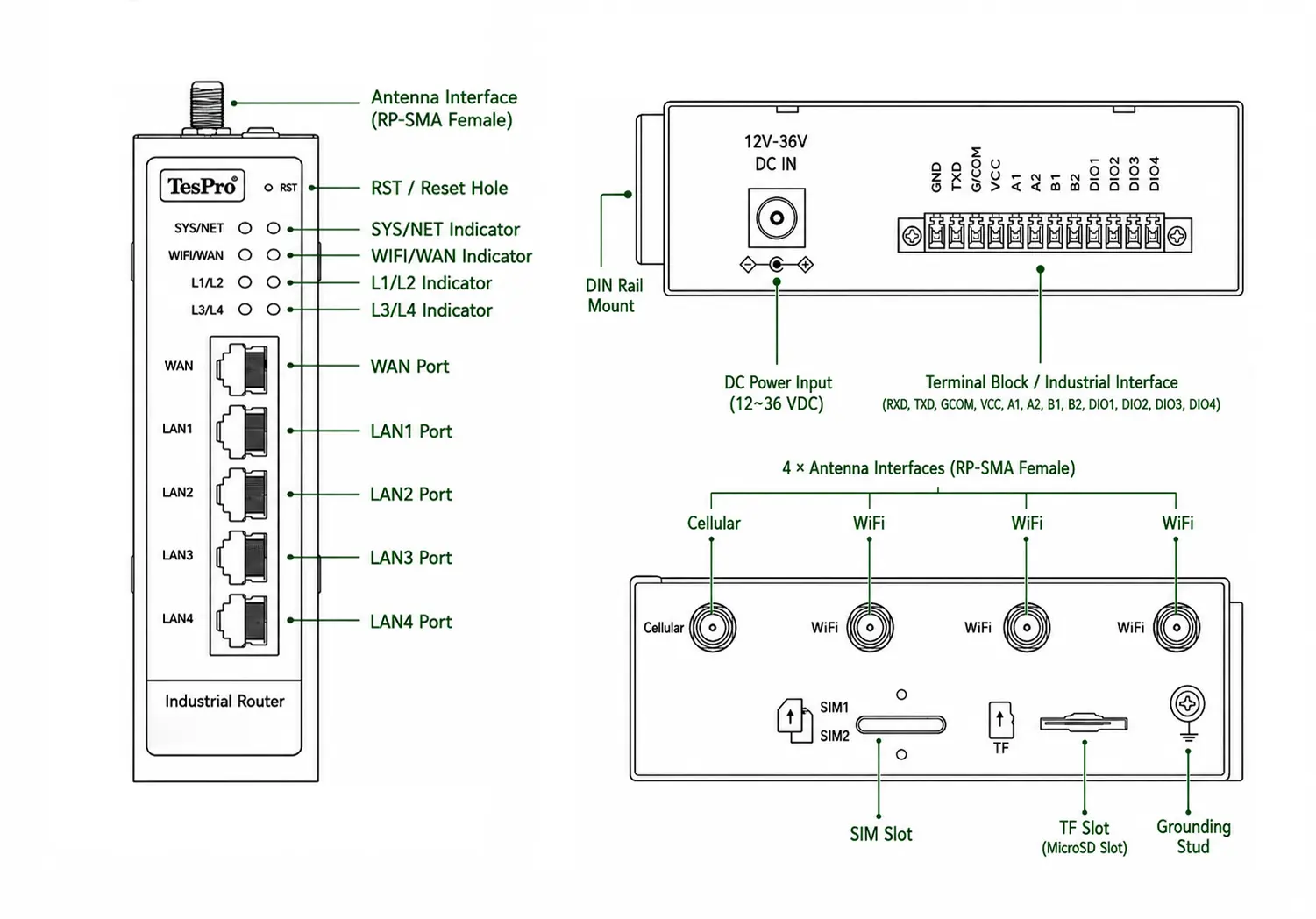
مخطط الواجهة
مخطط الأبعاد
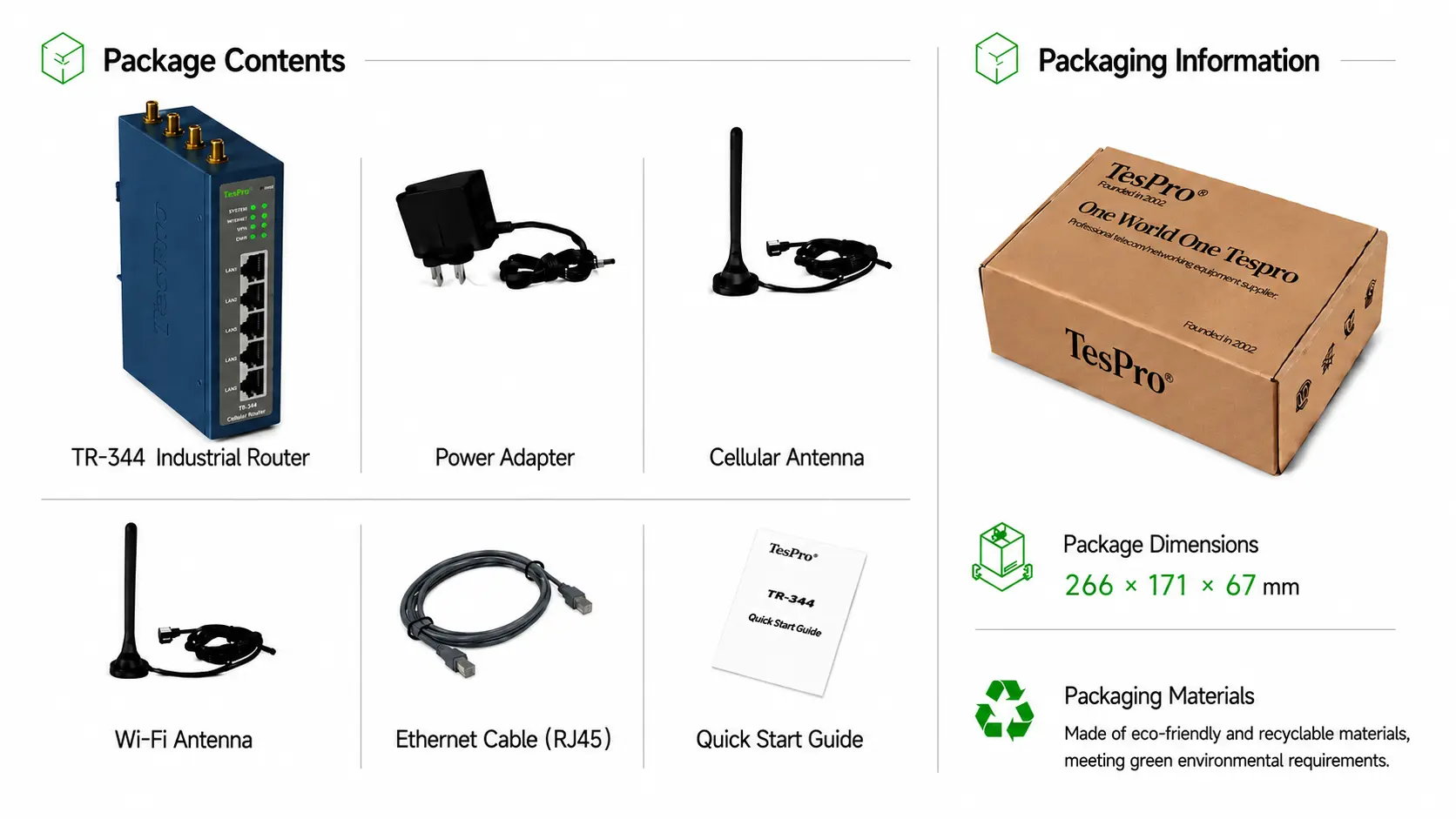
مخطط الإكسسوارات
Explore our Solutions
حلول الاتصال الصناعي والشبكات
تقديم حلول قوية لشبكات الاتصالات الخلوية والإيثرنت مصممة لنقل البيانات بشكل موثوق في سيناريوهات صناعية متنوعة
Download Materials
الأسئلة الشائعة
لمساعدتك على فهم أداء منتجاتنا وتوافقها واستخدامها بشكل أفضل، قمنا بتجميع إجابات للأسئلة الشائعة الآن. إذا لم يكن استفسارك مدرجا أدناه، لا تتردد في التواصل معنا مباشرة لمزيد من المساعدة.
تواصل معنا
-
What network and communication methods do TR300-Class industrial routers support?

-
The core value of this series is connecting field devices to carrier cellular networks while providing local Ethernet and Wi-Fi connectivity. Using representative models from the official website as examples, TR-324 corresponds to 4G LTE and TR-325 to 5G LTE; the product-series catalog also covers different cellular generations. For multinational projects, support for local 2G/3G fallback, specific LTE/5G bands, carrier certification, and APN configuration should be confirmed in writing by sales according to the target country and module version.
1. Cellular network: TR-324 is designed for 4G LTE, while TR-325 is designed for 5G LTE. If a project requires multi-mode fallback or specific frequency bands, the target region, carrier, and module configuration must be verified.
2. Wi-Fi: The representative model pages list IEEE 802.11 a/b/g/n/ac and cover the 2.4 GHz and 5 GHz bands. Dual-band Wi-Fi can be used for nearby maintenance, local terminal access, or as a backup link; actual throughput varies with the chipset, channel bandwidth, environment, and model.
3. Wired Ethernet: Gigabit LAN is suitable for connecting PLCs, industrial switches, cameras, HMIs, edge devices, or local maintenance PCs to the same network.
4. Redundancy concept: Representative model pages mention dual-SIM standby and backup switching among wired, Wi-Fi, and cellular links. Dual SIM does not mean every model supports eSIM or automatic dual-carrier strategies; projects must confirm the SIM slots, switching policy, and service plan.
-
What interfaces do TR300-Class industrial routers provide, and how are field devices connected?
-
Representative models typically combine “cellular uplink + Gigabit Ethernet + industrial serial ports.” For devices such as energy meters, PLCs, variable-frequency drives, and environmental sensors, Ethernet, RS485, or RS232 can be selected according to the device interface. Routers are better suited to providing connectivity, forwarding, remote maintenance, and local network management; complex protocol acquisition/conversion requirements can be addressed together with an industrial gateway or protocol converter.
1. Ethernet ports: The top sections of the TR-324/325 pages both list a 2×LAN Gigabit configuration; the specification sections also contain descriptions of LAN0 supporting WAN/LAN auto-adaptation and three Gigabit LAN ports. The inquiry should therefore clearly specify “WAN/LAN quantity, Gigabit/100 Mbps, and whether switching is supported.”
2. Serial ports: The pages confirm RS485- and RS232-type interfaces for common industrial field devices. The exact port quantities are not presented consistently, so the BOM should explicitly lock down the number of RS485/RS232 ports, terminal definitions, isolation requirements, and termination-resistor requirements.
3. SIM and antennas: Representative model pages list dual-layer SIM slots and SMA antenna connectors. The quantity and gain of cellular and Wi-Fi antennas should be confirmed together with site coverage, cabinet installation, and lightning-protection requirements.
4. Power and installation: Representative models are rated for DC 12–36 V and include DC power input, reset, and status indication. The product introduction also describes DIN-rail mounting for deployment inside control cabinets.
-
What are the key technical advantages of TR300-Class industrial routers?
-
The advantage of TR300-Class routers is not simply “Internet access,” but the combination of cellular WAN connectivity, field-device access, network redundancy, and industrial environmental adaptability in an engineering-ready connection node. The following six points are suitable for websites, proposals, or customer inquiry responses, but the product-selection note “confirm by model” should be retained.
1. Multi-mode cellular access: 4G or 5G models meet different bandwidth and latency requirements, while dual-SIM and multi-network redundancy can be confirmed on a project basis.
2. Gigabit local networking: Representative models provide Gigabit Ethernet for industrial switches, edge terminals, and local maintenance networks.
3. Industrial serial connectivity: RS485/RS232 helps connect legacy PLCs, meters, controllers, and smart meters, reducing the need for additional interface converters.
4. Remote network operation and maintenance: The router section of the official website mentions VPN support and remote management. The VPN types actually available, account permissions, remote upgrade functions, and platform capabilities must be confirmed according to the software version, project architecture, and security policy.
5. Link-continuity design: Representative pages mention dual-SIM standby and backup switching among cellular, Wi-Fi, and wired links to reduce the impact of a single unavailable network on data backhaul.
6. Adaptability to harsh environments: The TR-324/325 pages list operation from -40°C to +75°C, 5%–95% non-condensing humidity, and wide-voltage DC 12–36 V, making them suitable for industrial cabinets, protected outdoor enclosures, and utility facilities. For high-altitude, high-humidity, high-salt-fog, or high-voltage environments, product certification and enclosure-system design must be confirmed separately.
-
What are the main application scenarios for TR300-Class industrial routers?
-
This series is particularly suitable for projects where “devices are distributed, on-site service is costly, and stable wide-area network backhaul is required.” The following six categories are typical directions; actual solutions should first complete signal testing, network-security design, power-supply evaluation, and protocol integration testing.
1. Industrial automation: Connect PLCs, HMIs, variable-frequency drives, or production-line control networks to enable status viewing, remote maintenance, and cross-site data backhaul.
2. Smart buildings: Connect building controllers, energy meters, HVAC plant rooms, or BMS subnets to upper-level platforms.
3. Outdoor environmental monitoring: Provide cellular backhaul for weather, dust, water-quality, and station sensors; waterproof enclosures, surge protection, and antenna solutions are also required.
4. Intelligent transportation: Used for distributed network nodes such as roadside equipment, parking systems, bus stops, and traffic monitoring.
5. Smart energy and power: Connect electricity meters, distribution monitoring devices, PV inverters, or energy-storage subsystems and transmit data to a central platform.
6. Smart robots and mobile equipment: Provide cellular network access for mobile or remote equipment in warehouses, campuses, construction machinery, and similar scenarios; bandwidth, roaming, coverage, and security policies must be validated on site.
-
Which protocols and systems are TR300-Class industrial routers suitable for?
-
Representative model pages list multiple power-metering and industrial protocols, including DL/T 645-2007, IEC 62056-21, IEC 1107, IEC 61850, DLMS, as well as Modbus RTU, Modbus TCP, BACnet, M-Bus, and OPC UA. Note that the router’s fundamental role is network transmission and remote connectivity. Whether it can “directly parse, acquire, or convert” a specific protocol also depends on the purchased model’s software functions, the peer device, mapping rules, and the project integration method.
1. When an existing host computer, edge gateway, or platform performs protocol parsing, the router can provide stable cellular backhaul and local network access.
2. When multi-device acquisition, offline caching, edge logic, and large-scale protocol adaptation are required, prioritize evaluation of the TG series industrial gateways.
3. When explicit data mapping between BACnet and Modbus, or OPC UA and Modbus, is required, prioritize evaluation of the TC-100 protocol converter.
4. Before purchasing, provide the device protocol manual, point list, baud rate/parity settings, network topology, security requirements, and target-platform interface so that feasibility can be confirmed.
-
How are warranty, pricing, and purchasing handled for TR300-Class industrial routers?
-
The official product pages provide “Request a Quote” and sales contact options, but do not publish a uniform standard warranty period, retail prices for all SKUs, or extended-warranty terms. Therefore, external publications should state that details are “subject to the written sales quotation, order, and contract,” and should avoid presenting an unpublished one-year warranty or 2–5-year extended warranty as an established commitment.
1. Warranty and extended warranty: It is recommended to provide sales with the model, quantity, deployment country, project environment, service-response requirements, and spare-parts requirements, and request written quotations for the standard warranty, 2–5-year extended warranty, or project services.
2. Pricing and samples: Small-quantity samples can be viewed through the Tespro Online Shop; bulk purchases, OEM/ODM, specific frequency bands, custom protocols, or project packages should be formally quoted by sales.
3. Contact sales: The sales quotation email is sales@tespro.com; the general inquiry email is info@tespro.com. The official website lists telephone/WhatsApp numbers +852 4609 4648 and +1-213 610 4797.
4. Learn more: Products, cases, and demonstrations can be viewed through Tespro’s official Facebook, LinkedIn, YouTube, TikTok, X, and Instagram accounts. The official datasheet and written response should be treated as the final technical reference.
5. Inquiry recommendation: Including the model, country/carrier, quantity, network bands, SIM plan, interfaces, protocols, temperature/humidity and enclosure requirements, lightning protection, certification, lead time, and after-sales requirements in the email can significantly improve product-selection and quotation efficiency.

